You just got the keys. Your hands are still shaking a little, and somewhere between the champagne toast and the pile of moving boxes, a quiet thought creeps in: “Wait… now what?”
That feeling is completely normal. Buying a house is one of the biggest milestones of your life, but nobody hands you an instruction manual when the closing papers are signed.
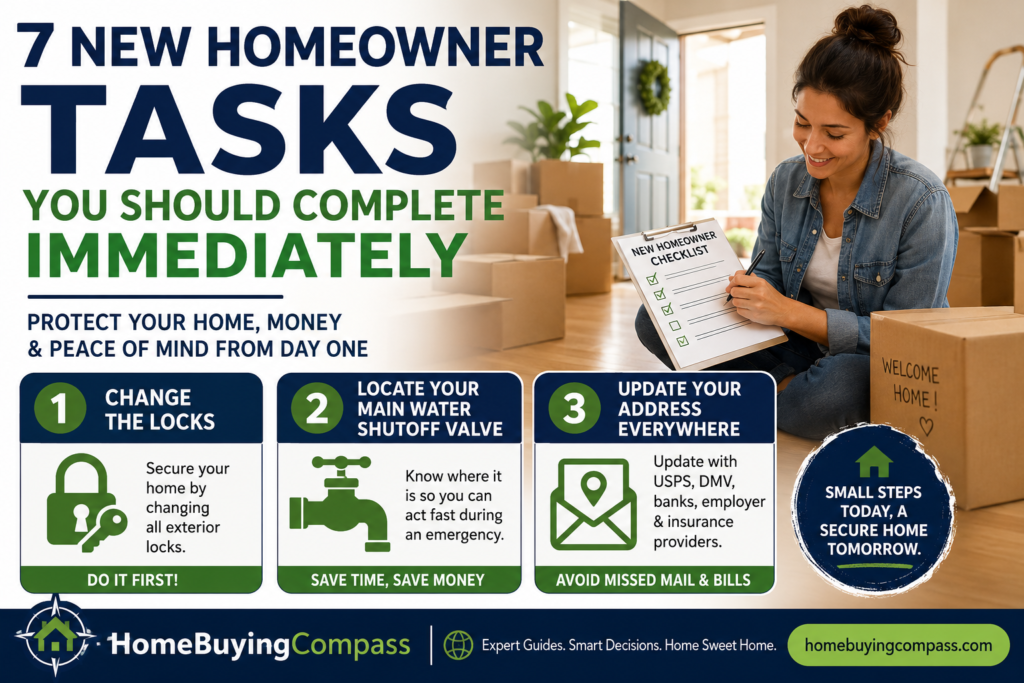
Quick Answer: The 7 things you should do immediately after buying a home are: change your locks, locate your main water shutoff valve, update your address, set up home insurance and warranty coverage, find your circuit breaker panel, organize your closing documents, and create a home maintenance schedule. These tasks protect your investment, your safety, and your sanity in the first 30 days of homeownership.
Let’s walk through each one, why it matters, and exactly how to knock it out without feeling overwhelmed.
Why These First Steps Matter More Than People Realize
Here’s what most first time home buyers don’t realize: the closing table isn’t the finish line. It’s the starting line.
According to the Consumer Financial Protection Bureau, a huge number of new owners skip basic safety and admin tasks simply because no one tells them these things matter right away. And this is exactly why so many small oversights turn into expensive headaches six months later.
The good news? None of these tasks are complicated. You just need to know they exist.
1. Change the Locks (Seriously, Do This First)
You have no idea how many copies of your house key are floating around. The previous owner’s family, their real estate agent, a neighbor who watered plants during vacations, a contractor from three years ago — any of them could still have one.
This isn’t paranoia. It’s basic home security, and it costs less than you’d think.
What It Costs and How Long It Takes
- Cost: $50–$200 for a locksmith, or $15–$40 per lock if you DIY it
- Time: Under an hour for most front and back doors
- Why it matters: Peace of mind is priceless when it’s your family’s safety on the line
2. Find Your Main Water Shutoff Valve
Imagine this: it’s 11 p.m., a pipe bursts under your kitchen sink, and water is spreading across your new floors. Do you know where to shut it off?
Sarah, a first-time buyer in Ohio, learned this the hard way when a washing machine hose failed while she was at work. By the time she got home, water had soaked through her living room ceiling below. She later said finding that shutoff valve became her very first priority in every home she’ll ever own again.
Locate this valve today, not during an emergency. It’s usually near your water meter, in the basement, or in a utility closet.
3. Update Your Address Everywhere That Matters
This feels tedious, so it’s easy to keep pushing off. However, delaying it can mean missed bills, lost mail, or even identity theft risks.
Priority Order for Address Updates
- USPS mail forwarding — set this up first, it’s your safety net
- Driver’s license and vehicle registration — most states require this within 30 days
- Banks and credit cards — protects your financial accounts
- Employer and payroll — so your tax documents arrive correctly
- Insurance providers — health, auto, and life policies
- Subscriptions and memberships — the fun one to save for last
4. Set Up Homeowners Insurance and Consider a Home Warranty
You likely already have insurance to close on the house. Now it’s time to actually understand it.
Homeowners insurance protects your structure and belongings from disasters. A home warranty, on the other hand, covers mechanical failures like a broken water heater or dead HVAC system. They sound similar, but they solve very different problems.
| Coverage Type | What It Covers | Average Annual Cost |
| Homeowners Insurance | Fire, storms, theft, liability | $1,400–$2,200 |
| Home Warranty | Appliances, plumbing, electrical systems | $300–$600 |
According to the Insurance Information Institute, most policies don’t automatically cover flood damage, so ask directly if you’re in a flood-prone area.
5. Locate Your Circuit Breaker Panel
This one sounds boring, until the power goes out and you’re fumbling around in the dark with your phone flashlight.
Take five minutes now to find your breaker panel and label each switch. Trust us, future you will be deeply grateful.
Why This Small Task Has a Big Payoff
- Prevents panic during power outages or tripped breakers
- Helps electricians diagnose issues faster if something goes wrong
- Makes future renovations or appliance installs much smoother
6. Organize and Store Your Closing Documents
Somewhere in a folder (digital or physical) you now have a mortgage note, deed, title insurance policy, and closing disclosure. These documents matter more than you think.
You’ll need them for taxes, refinancing, insurance claims, or if you ever sell the home. Losing them means paying fees to track down replacements later.
Pro tip: Scan everything and store copies in cloud storage, plus keep physical originals in a fireproof box.
7. Build a Simple Home Maintenance Schedule
This is where many buyers make a costly mistake: they assume maintenance is optional until something breaks. In reality, a little prevention saves thousands of dollars down the road.
A Simple Numbered Plan to Get Started
- Week 1: Test smoke detectors and carbon monoxide alarms
- Month 1: Replace HVAC filters and check for it on a 90-day recurring reminder
- Month 2: Inspect the roof and gutters for debris or damage
- Month 3: Check caulking around windows and doors for drafts
- Every 6 months: Flush the water heater and inspect for leaks
- Annually: Schedule a professional HVAC tune-up before summer and winter
The truth is, buying a house feels overwhelming for almost everyone. But once these seven tasks are done, most new owners say the anxiety fades fast and genuine excitement takes over.
Common Mistakes New Homeowners Make
- Assuming the previous owner’s warranty transfers automatically. It usually doesn’t unless you confirm and register it yourself.
- Forgetting to budget for maintenance. Experts often recommend saving 1–2% of your home’s value annually for upkeep, according to HUD guidance on homeownership.
- Ignoring small issues, like a slow leak, because “it’s not that bad yet.” Small leaks become expensive repairs fast.
- Not reading the homeowners association rules before making exterior changes, which can lead to fines.
You’ve Got This
Homeownership isn’t about being perfect from day one. It’s about protecting what you worked so hard to get, one small task at a time.
So take a breath. Grab a notepad. Knock these seven things out over the next two weekends, and you’ll feel more confident, more secure, and genuinely proud of the home you built this life in.
You didn’t just buy a house. You built a foundation. Now go protect it.
FAQ Section
How soon after closing should I change the locks? Ideally within the first 24–48 hours, before you move in your valuables or spend your first night in the home.
Do I really need a home warranty if I have homeowners insurance? Not always, but it’s worth it if your major appliances or HVAC system are older than 5 years, since warranties cover mechanical breakdowns insurance won’t.
What’s the average cost of home maintenance per year? Most experts, including HUD, suggest budgeting 1–2% of your home’s purchase price annually for upkeep and repairs.
How do I find my home’s main water shutoff valve? Check near the water meter, in the basement, a utility closet, or along the home’s foundation wall facing the street.
Should I keep paper copies of my closing documents or go digital? Both. Keep scanned digital copies in secure cloud storage and physical originals in a fireproof, waterproof box.
What happens if I forget to update my address with the DMV? Most states require an address update within 30 days of moving, and failing to do so can result in fines or issues renewing your registration.